Pull off the highway between Big Bend National Park and the open desert, and you'll find a cluster of crumbling adobe walls, weathered headstones, and a single porch where someone — usually — is playing a guitar. This is Terlingua Ghost Town. It's been declared dead at least three times. It refuses to stay that way.
The Boom Years
Cinnabar — the bright red ore that mercury is refined from — was discovered in the rocky hills around Terlingua Creek in the mid-1880s. By 1900, four mining companies were operating in the district, and the population was climbing. In May 1903, a Chicago industrialist named Howard E. Perry incorporated the Chisos Mining Company, which would grow into the largest mercury producer in the United States.
At its peak, Terlingua was home to around 2,000 people — miners, refinery workers, a company doctor, a school, a movie theater, and the company store that held everyone's wages until payday. Perry himself, infamously, almost never visited.
Mercury was strategic in those decades. It was essential to detonators, explosives, dental fillings, scientific instruments, and the chemistry of countless other goods. Both World Wars sent quicksilver prices soaring. Both ended with prices in collapse.
The Bust
By 1942, the easy ore was gone. Mining at greater depth was costly, and synthetic alternatives to mercury were eroding demand. The Chisos Mining Company went bankrupt in 1942. Smaller operators hung on through the post-war years, but by 1947 all the district's mines were closed.
The town emptied within months. Families packed pickup trucks and left. Roofs were scavenged for materials. Doors and windows disappeared. Headstones in the cemetery weathered alone. Coyotes moved into the school. By 1950, Terlingua had a population of about 25 hangers-on. It was, by every definition, a ghost town.
The Slow Resurrection
In 1967, a small group of chili enthusiasts gathered in front of the abandoned theater for what they called the World Championship Chili Cookoff. It was supposed to be a one-time joke. It became an annual event, and by the 1980s it was drawing thousands of people to a town that no longer existed on most maps.
Artists, river guides, and desert eccentrics began moving in — slowly at first, then with growing momentum. The adobe ruins around the old company store became studios, galleries, bars, and cottages. The Starlight Theatre got a new roof in 1991 and reopened as a restaurant. Walking tours of the cemetery became a thing.
Today, the population of Terlingua proper is somewhere between 70 and a few hundred, depending on who you count. The "ghost town" designation is mostly tongue-in-cheek now — though plenty of the original ruins remain, and that's a big part of why people come.
What to See
The Cemetery. Walk it at sunset. Many of the graves are unmarked or marked only with wooden crosses and stacked stones. The most poignant section holds children who died in 1918–1919 from the Spanish flu, which struck the isolated mining camp particularly hard.
The Trading Company. The former Chisos Mining Company store still stands, restored as a porch-front shop selling local crafts, books on regional history, and reliably cold drinks. The porch is the social center of Terlingua — claim a chair and stay a while.
The Starlight Theatre. Once a silent movie house for miners, now a restaurant and live music venue. Steaks, chili, full bar, music most nights in season. (Full story here.)
The Old Perry Mansion. Howard Perry's hilltop residence overlooks the town. Walk up for the views; the building itself is privately owned but visible from the path.
The Annual Chili Cookoff. First Saturday of November. If you've ever wondered what 10,000 people in cowboy hats eating chili sounds like, this is your chance. (Visit Big Bend has details on the events.)
Practical Notes
Terlingua Ghost Town sits at the intersection of FM 170 and FM 1810, three miles from the western entrance to Big Bend National Park. Drive in slowly — the road in is a single switchback that delivers a panoramic first view that's worth slowing down for.
Most of the ruins are walkable; wear sturdy shoes. Bring water. Snake season is March through October — watch where you step in the shadows of crumbling walls.
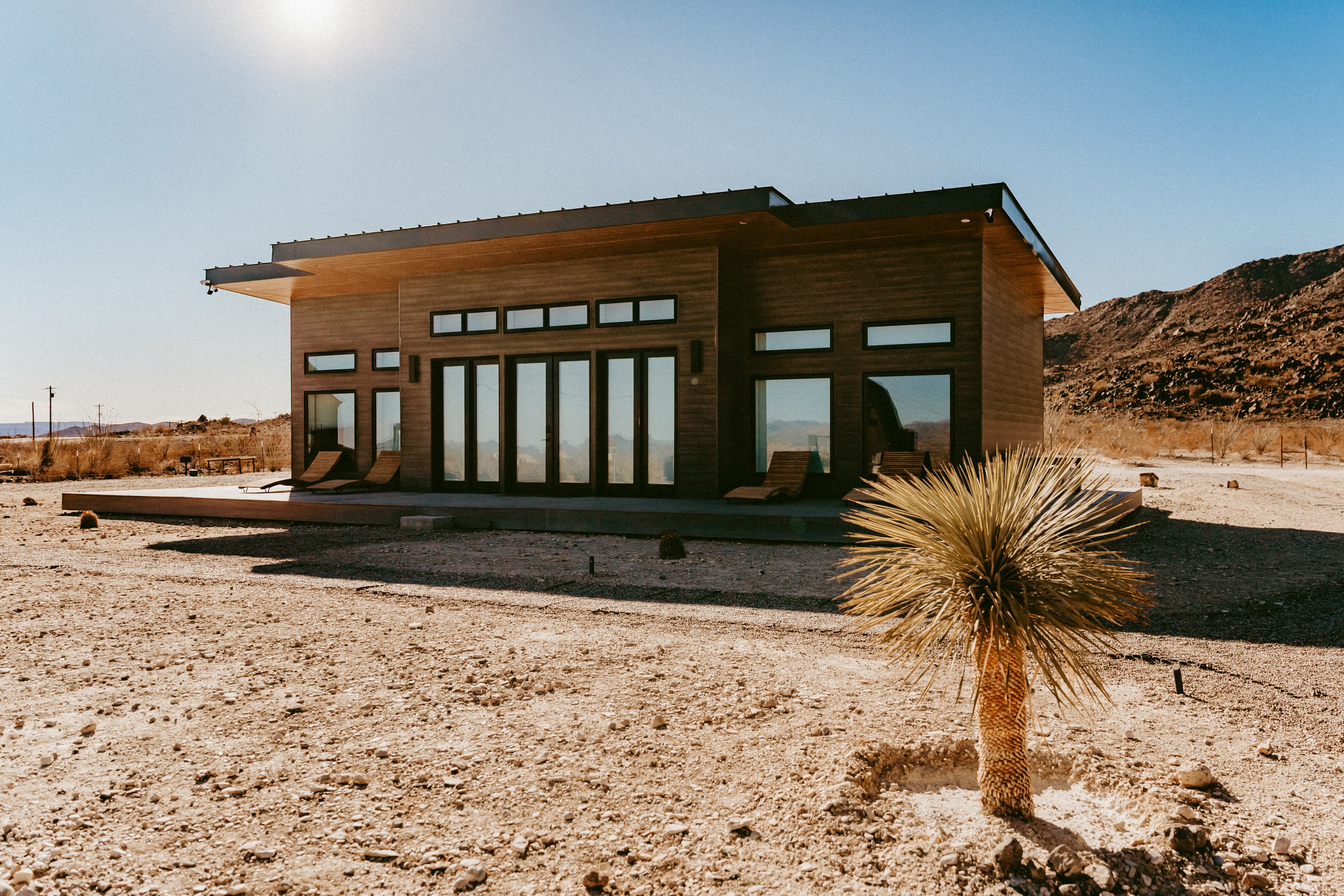
If you're staying at Stardust Big Bend, the Ghost Town is a three-minute drive. Many of our guests do the Starlight Theatre for dinner, walk the cemetery at sunset, and then drive back for stargazing from their cabin deck. It's hard to imagine a better evening in West Texas.