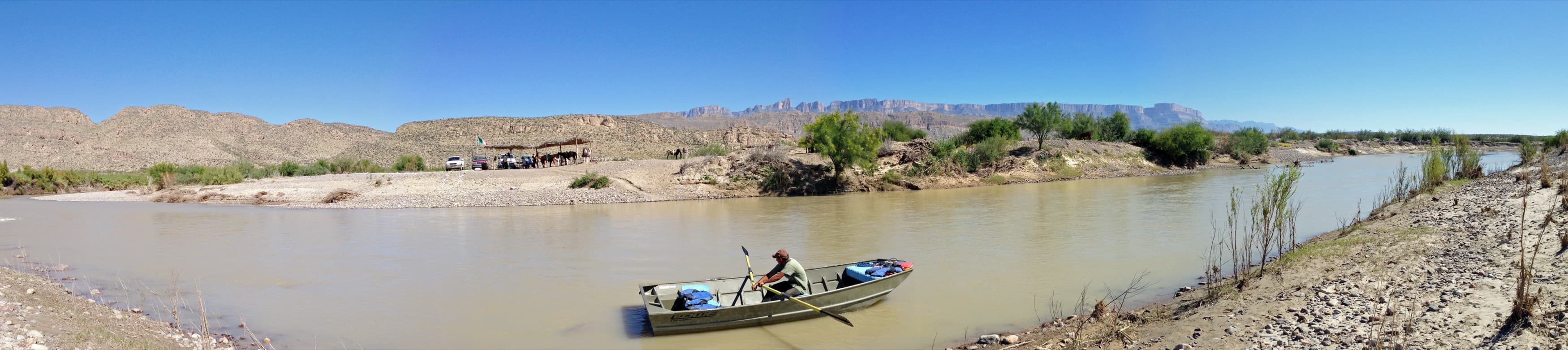
Boquillas del Carmen is a Mexican village of about 250 people that's accessible to the outside world by exactly one route: a small rowboat across the Rio Grande from Big Bend National Park. It's the only US–Mexico border crossing within a US national park. Spend an afternoon there and it changes how you think about international borders.
The Backstory
Boquillas was founded in the 1880s as a mining town — same mercury and silver boom that built Terlingua. When the mines closed in the early 20th century, most of the original residents drifted away, but the village hung on as a tiny ranching outpost. For most of the 20th century it had no road to the rest of Mexico. The only practical access was the river crossing into the US, and Boquillas's economy ran on day-trippers from Big Bend who came over for lunch.
After 9/11, the crossing was closed for security reasons. The village was cut off. The economy collapsed. Residents who'd lived their entire lives on tourism from the US side suddenly had nothing.
In 2013, after more than a decade of negotiation between the US and Mexican governments and the local community, the Boquillas Port of Entry reopened — this time as a properly regulated, low-volume crossing with kiosks on both sides and a National Park Service presence. The village's economy revived almost immediately. The whole operation is one of the better stories in modern US–Mexico relations.
How the Crossing Works
The Boquillas Port of Entry is open Wednesday through Sunday from November through April (winter schedule) and Friday through Monday from May through October (summer schedule), 9:00am to 4:00pm.
1. Drive to the Boquillas Crossing parking lot off the east side of the park, near Rio Grande Village. 2. Walk into the US-side entry kiosk to declare yourself crossing into Mexico. NPS staff give a quick orientation. 3. Walk a short trail down to the Rio Grande. A local rower in a flat-bottomed wooden boat will ferry you across for $5 per person round trip. The crossing takes about 90 seconds. 4. On the Mexican side, you'll be on the bank about a mile from the village. Walk in, or pay $8 for a donkey, $5 for a guide on foot, or a few dollars for a pickup truck ride. Locals in Boquillas run the whole operation cooperatively. 5. In the village, present your passport at the Mexican entry kiosk. 6. Repeat in reverse to come back. You must be back across the river before the US port closes at 4pm. Don't miss this; there's no overnight option on the Mexican side for visitors without prior arrangement.
What You'll Need
- A valid US passport or passport card — birth certificates and driver's licenses are not accepted at this port of entry
- Cash (USD works fine; small bills preferred). You'll spend $5 on the rower, $5–$10 on transport to the village, plus lunch and any purchases
- Comfortable walking shoes if you plan to walk into town
- Patience — this is not a high-volume border. Wait times are short but the pace is slow
What to Do in Boquillas
Eat lunch. The two main restaurants are José Falcon's (on the bluff above the river, the village's social center) and the Boquillas Restaurant Bar in the center of town. Both serve simple Mexican home cooking — enchiladas, tacos, fresh-made tortillas. Both have cold beer.
Walk the village. Boquillas covers maybe four blocks. The painted cinderblock houses, the dusty main street, the church — it's a small, quiet, completely unfussy place. The kids will follow you for a while if you let them.
Buy something. Many families sell handmade crafts to support themselves — wire-and-bead scorpions, embroidered cloth, painted walking sticks. Prices are low, quality is mixed, and every dollar you spend stays in the village.
Tip the rower and your guide. A few dollars to each is generous and appropriate.
What Not to Do
- Don't cross outside the official port hours or location. It's a federal crime to cross without inspection, even for a few hours.
- Don't bring back prohibited items. Plants, animal products, certain meats — check the US Customs page if uncertain. Crafts and food sealed for travel are generally fine.
- Don't expect cell service. Mexican carriers don't reach Boquillas; US carriers don't reach across the river. Tell your group where you're going and be back at the river before 4pm.
When to Go
The crossing works year-round. Cooler months — November through March — are the most comfortable for the exposed walk from the landing to the village. In summer, simply go in the morning: cross early, enjoy the village before the midday heat, and be back at the river by mid-afternoon. Bring water and a hat whatever the season.
The crossing is also closed entirely on certain US federal holidays and during occasional flood/security events. The NPS Boquillas page has the current calendar.
Why It's Worth the Day
Boquillas is the only place I've been where you cross an international border in a rowboat. That alone is worth the drive. But it's also genuinely useful in a smaller way: spending an afternoon in a small Mexican village whose entire economy depends on a peaceful relationship with the US side of the river will change the way you think about a lot of things you've been told about borders.
From Stardust Big Bend, the drive to the crossing is about 90 minutes each way. Most people pair Boquillas with the Hot Springs — both are on the east side of the park, both are best in cool weather, and together they make one of the most memorable days in West Texas.