There's a moment that happens to nearly every first-time visitor to Big Bend. The sun drops behind the Chisos Mountains, the last orange fades from the sky, and then — slowly, overwhelmingly — the stars come out. Not just a handful. Not just the bright ones you can see from the suburbs. All of them. Thousands. And then the Milky Way, arching overhead like a river of light.
This is why Big Bend is considered one of the premier stargazing destinations on the planet.
The Largest Dark Sky Reserve in the World
In 2022, the Greater Big Bend region was designated as an International Dark Sky Reserve — the largest such reserve on Earth, covering more than 9 million acres spanning from Fort Davis south to the Rio Grande and into the protected areas of northern Mexico. It is the world's first bi-national Dark Sky Reserve.
Big Bend National Park itself has held a separate Gold-tier International Dark Sky Park designation since 2012 — the highest individual rating. Together, these designations represent decades of work by local communities, ranchers, observatories, and conservation groups to limit artificial light pollution.
What You Can See
With skies this dark, even casual observers with no equipment can see:
- The Milky Way core is brightest from March through October, brilliant overhead in summer
- Andromeda Galaxy — the most distant object visible to the naked eye, 2.5 million light-years away
- Thousands of stars invisible from most populated areas
- Shooting stars on any clear night; spectacular during meteor showers
- Zodiacal light — a faint pyramid of sunlight reflected off interplanetary dust, visible after twilight in spring and before dawn in fall
- Planets — Venus, Jupiter, Mars, and Saturn regularly visible to the naked eye
Best Stargazing Spots
Sotol Vista on Ross Maxwell Scenic Drive is a classic choice — a wide overlook with horizon-to-horizon sky.
Fossil Discovery Exhibit has minimal light from the parking area and easy access from the main road.
Dugout Wells is remote, flat, and far from even the modest lights of Panther Junction.
Chisos Basin sits at elevation, giving cooler temperatures and a 360° horizon.
Rio Grande Village offers unique reflections of the Milky Way in the river below.
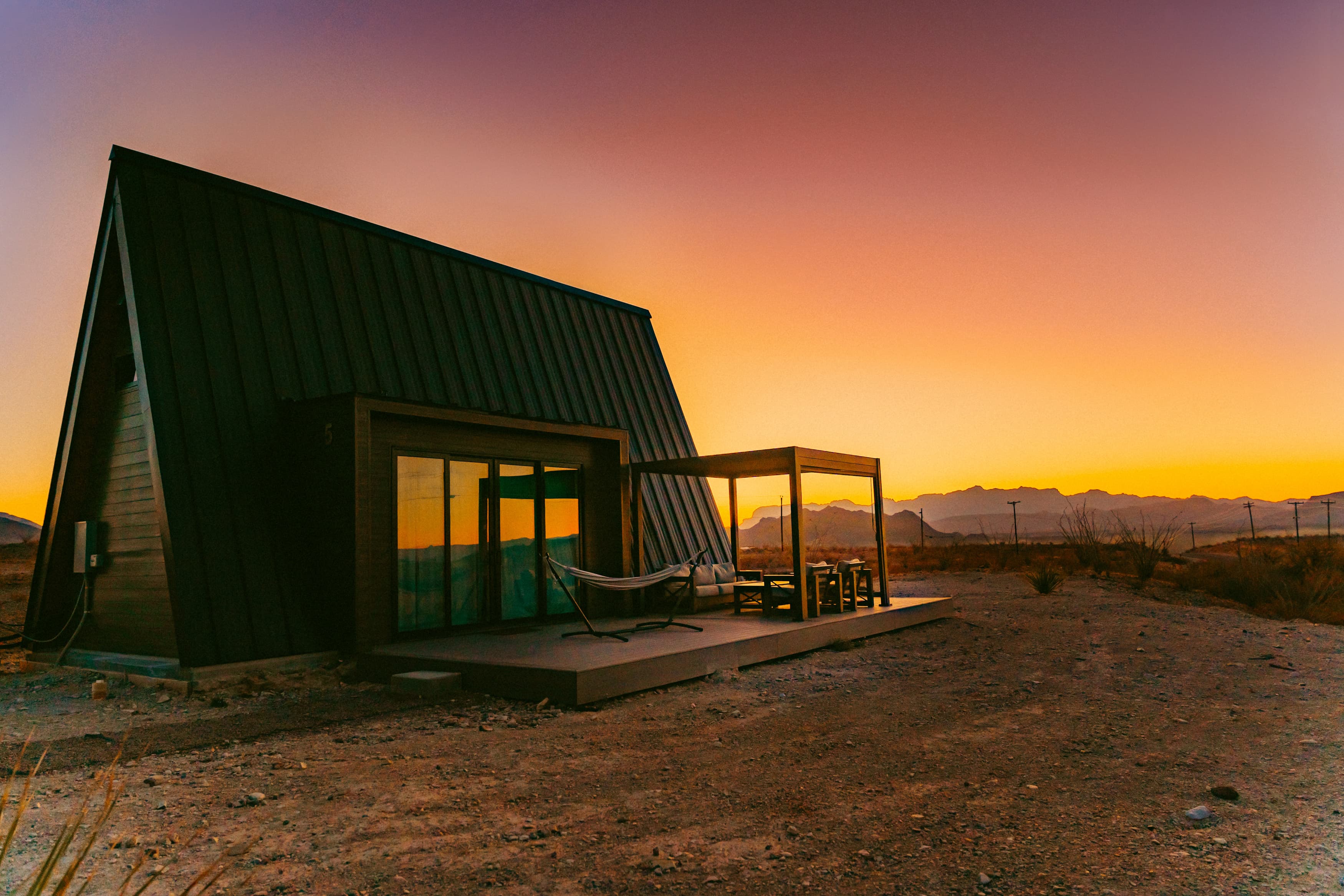
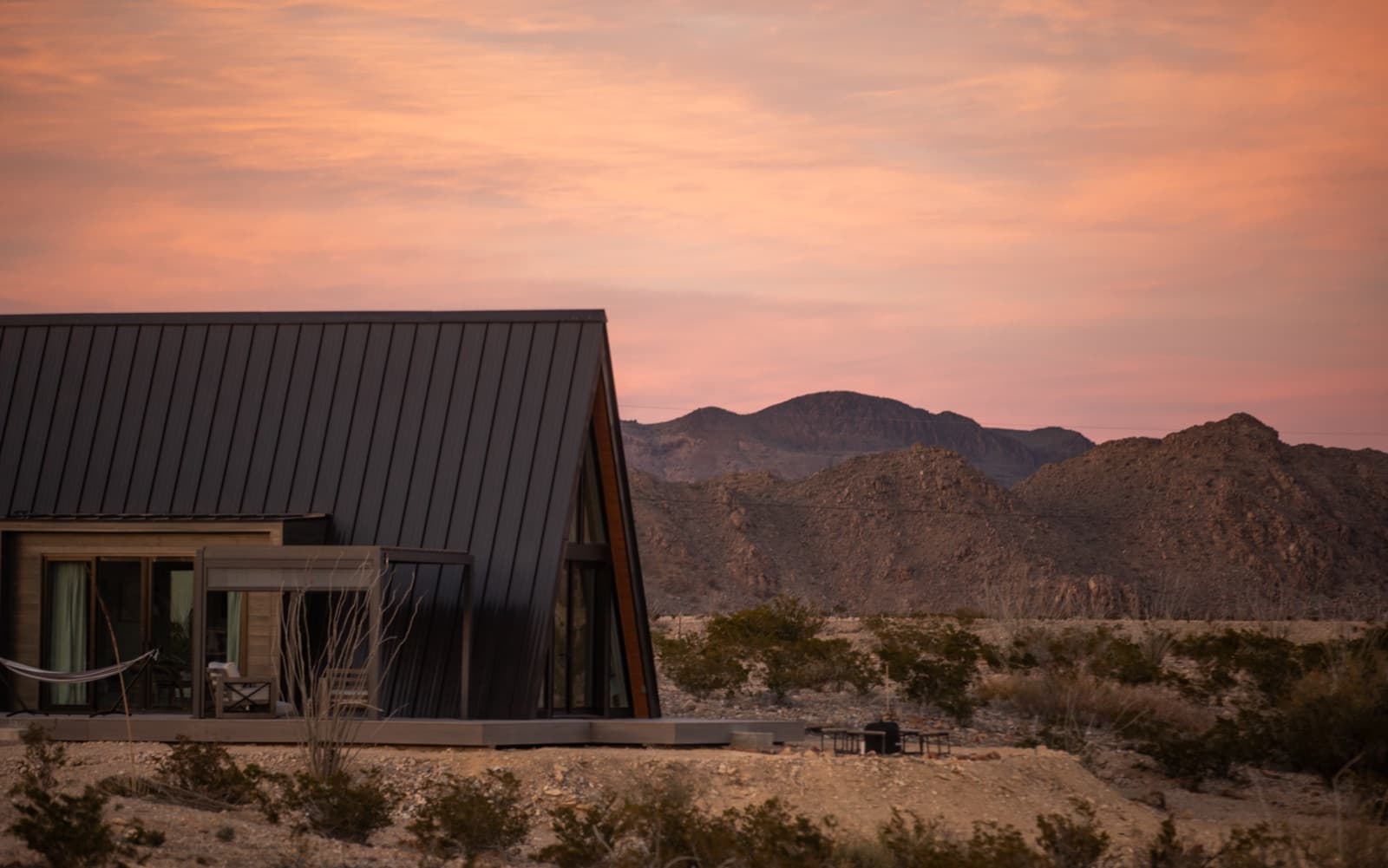
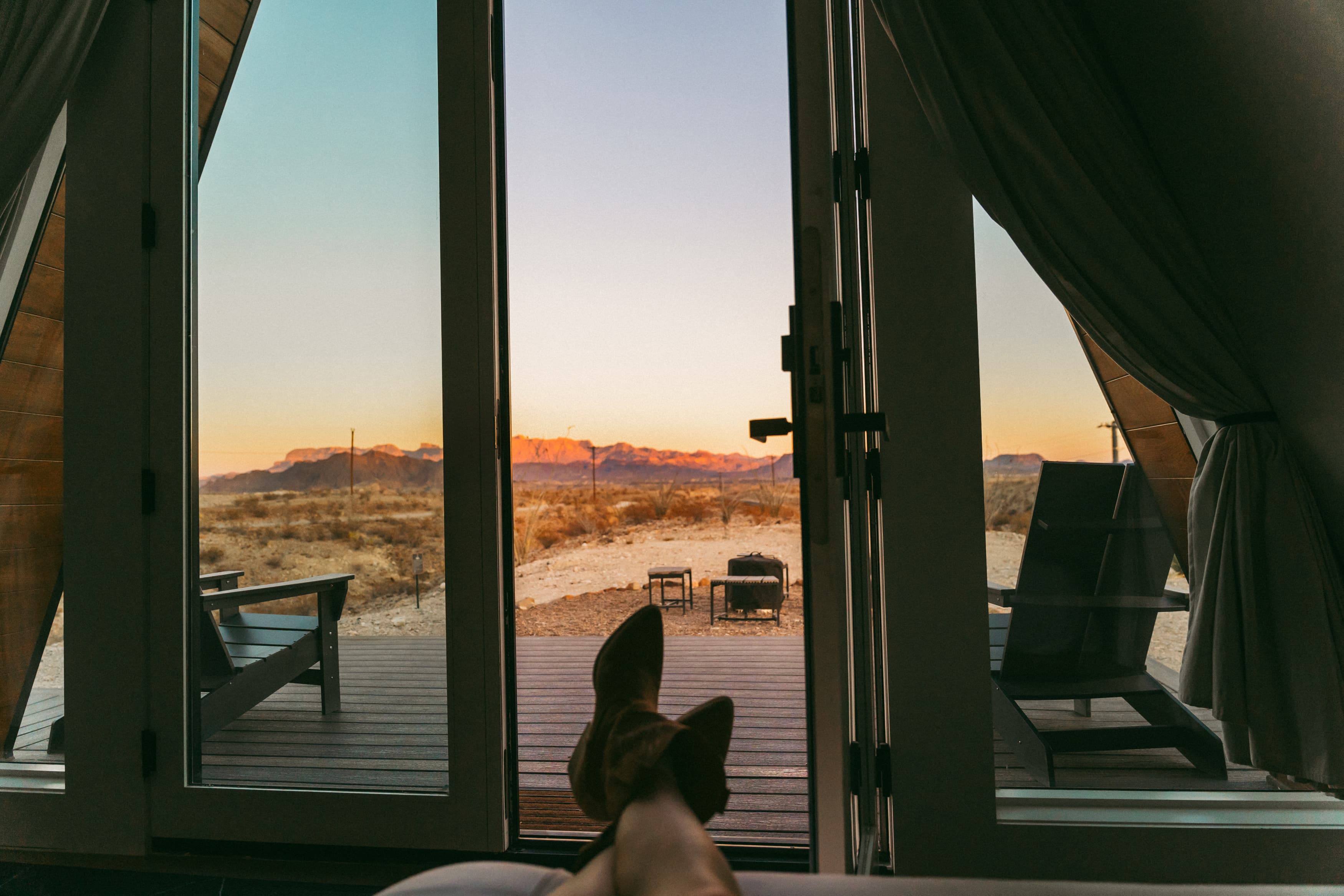
For the ultimate experience, stay at Stardust Big Bend. Our cabins are designed with outdoor decks oriented toward the darkest parts of the sky. Step onto your deck after dinner and the show begins.
Tips for Stargazers
Timing: New moon phases offer the darkest skies. Check lunar calendars before booking.
Adaptation: Your eyes need 20–30 minutes to fully dark-adapt. Use red-light flashlights to preserve your night vision.
Apps: Sky Map, Stellarium, and SkySafari help identify what you're seeing.
Gear: Even basic binoculars dramatically expand what's visible. A star chart or planisphere adds context.
Weather: Clear, dry air is essential. Big Bend's desert climate means exceptional transparency, but afternoon monsoons can cloud things up in summer.
Whatever brings you to Big Bend — the hiking, the solitude, the mining-history walks — the stars will be what you remember most.